
Selling an Inherited Home on the Eastside: Where to Start

The call usually starts the same way. Someone's parent has passed, there's a house in Bellevue or Kirkland or out in the valley full of forty years of life, and three siblings in three different states are wondering what they're supposed to do first. Nobody wants to make a mistake, and nobody wants it to drag on for a year.
There is no single right order for every family, but there is a sensible one. Here is how I'd walk through it if it were my own family. When you're ready for the hands on to do list, I keep a checklist for selling a parent's home with the paperwork and Bellevue details.
Figure out who is allowed to sell the house
People don't understand how much of a responsibility being an executor is until they're in it. The house is usually the biggest piece of it, so it helps to get the order right.
Before you pick an agent, a price or a listing date, you need to know who has the legal authority to sign. That depends on how the house was held when the owner died.
If the home goes through probate, the court appoints a personal representative, the person most people call the executor. In Washington, when the court grants that person nonintervention powers, they can sell estate property without going back to the judge for an order (RCW 11.68.090). That makes the sale itself work a lot like a normal one.
If the house was in a living trust, the trustee usually handles it. And if the owner recorded a transfer on death deed, the home passes to the named beneficiary outside of probate entirely. Your estate attorney will tell you which of these applies. Getting that answer first saves weeks later, because a buyer's title company will ask exactly the same question.
Protect the house while it sits
An empty house needs more attention than people expect. Keep the power, heat and water on so pipes don't freeze in a cold snap. Have someone check on it every week or two, bring in the mail and make sure it looks lived in.
Call the homeowner's insurance company too. Many policies treat a vacant home differently than an occupied one, and you want to know where you stand before something happens, not after.

Pick one point person for the family
The sales that go smoothly almost always have one person who talks to the attorney, the agent and the vendors, then shares updates with everyone else. That doesn't mean one sibling makes every call. It means decisions get made in one place, in writing, with everyone seeing the same numbers.
When I work with a family, I send the same updates, comps and offers to every heir who wants them. Nobody should feel like they're finding out secondhand.
Sort out the belongings before you list
This is usually the hardest part, and not because of the work. Start with what family members want to keep, and give people a real deadline so it doesn't stall. Photograph anything sentimental that nobody has room for.
After that, an estate sale company can sell furniture and household items, donations can take a lot of what's left, and a clean out crew can handle the rest in a day or two. The order matters: estate sale first, then donations, then the final haul. I'm happy to connect families with people my clients have liked.

Decide: fix it up or sell it as is
There are two honest paths here, and either can be the right one.
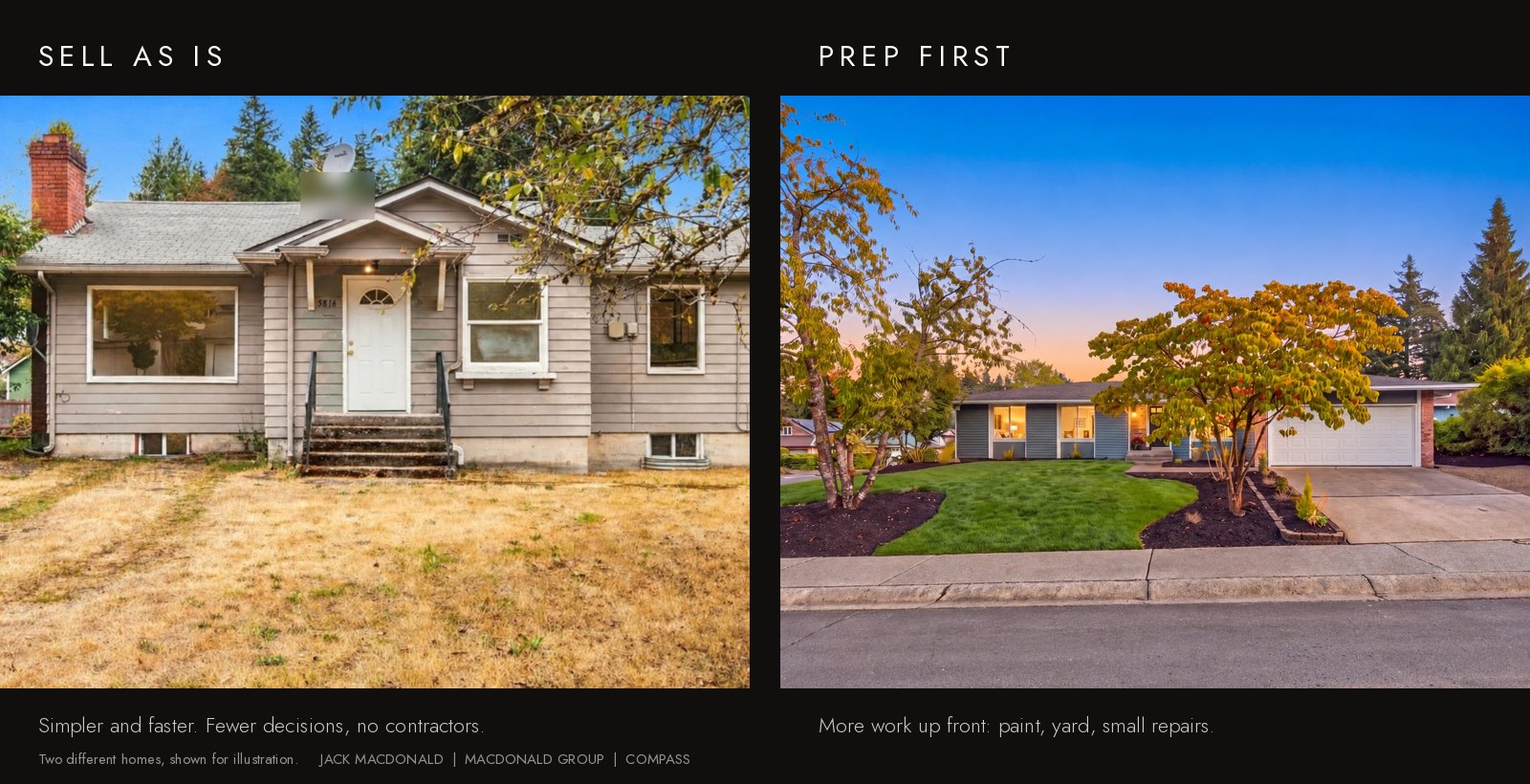
Selling as is is simpler and faster. Fewer decisions, no contractors, and buyers know what they are getting. Prepping first takes more time and money up front, usually paint, yard work, deep cleaning and small repairs, and it often brings a stronger price.
The way to decide is with real numbers. I walk the house and price both options: what it could sell for today, and what it could sell for after a short list of fixes, with conservative costs for each. Then the family chooses based on money, time and how much energy everyone has left.
Know the basic tax questions to ask
I'm not a CPA, and this is where you want one. But these are the questions families end up asking, so it helps to know them going in.
The IRS generally sets the tax basis of inherited property at its fair market value on the date of death. That is why many CPAs ask for a value as of that date. Washington's real estate excise tax does not apply to inheriting a home, but it does apply when an heir sells to an outside buyer, according to the Washington rule on inheritance transfers. Your CPA can tell you what all of that means for your situation.
If your CPA wants a sense of the market around the date of death, I can pull what similar homes nearby sold for around that time. Some will still want a formal appraisal, and that is their call.
Price it off what actually sold
Inherited homes are often priced emotionally in both directions. Some families want to hold out for what the house meant to them, and some just want it gone. The fix for both is the same: look at what similar homes near you actually sold for in the last few months, then adjust for condition. I show every heir the comps behind the number, so the price is something the whole family can agree on.
From there, the sale itself runs much like any other: photos, showings, offers, inspection and closing. The main differences are who signs and how many people need to stay in the loop. For family members who live out of state, signing can usually be arranged so nobody has to fly in.
Related guides
- Selling a House in Probate in Washington: How the Timeline Works
- Sell, Rent or Keep an Inherited House in King County?
- Clearing Out a Family Home Before You Sell on the Eastside
Sources: RCW 11.68.090, Washington rule on inheritance and excise tax, IRS: Gifts and inheritances, King County Law Library on transfer on death deeds. General information only, not legal or tax advice. For the full rundown, see how I help with inherited and estate homes.
Common Questions
Can we list an inherited house before probate is finished?
Often yes. Once the court appoints a personal representative and grants nonintervention powers, they can usually sell without waiting for the estate to close. Your estate attorney will confirm the timing for your situation.
Do all the heirs have to sign?
It depends on how the house is held. If a personal representative or trustee has authority, they typically sign for the estate or trust. If the heirs own the house directly, each owner usually signs. Your attorney and the title company will confirm who needs to sign.
What happens to the stuff left in the house?
Family keeps what they want first, then an estate sale company, donations and a final clean out handle the rest. Doing it in that order usually gets the house ready to list fastest.
Should we sell an inherited house as is?
Sometimes. Selling as is is simpler and faster, while a short list of fixes often brings a stronger price. The best way to decide is to price both options with real numbers before choosing.
Related posts
- Best Time of Year to Sell a Home on the EastsideOctober 26, 2026
- What It Actually Costs to Sell a Home in Washington StateOctober 21, 2026
- Selling an Inherited Home in Snohomish County: Everett to BothellOctober 20, 2026

Handling an inherited home or a parent's house?
I'm Jack Macdonald, a broker with the Macdonald Group of Compass. In 2026 I sold eight homes for one family's estate, from Everett down to Federal Way, and each one needed its own plan: inspections before listing, repairs, curb appeal, staging and photography, and keeping the executor and family updated the whole way.
If it would help to talk through your situation, send me a note or call or text 425.941.6998. There's no obligation, and I'm not an attorney, so I'll work alongside yours. See the estate homes I've sold.
Selling or inheriting a home is also a money decision. For retirement, tax and estate planning on the Eastside, I recommend Gevers Wealth Management in Issaquah.